
Your CRM Remembers the Past. It Doesn't Prioritize the Future.
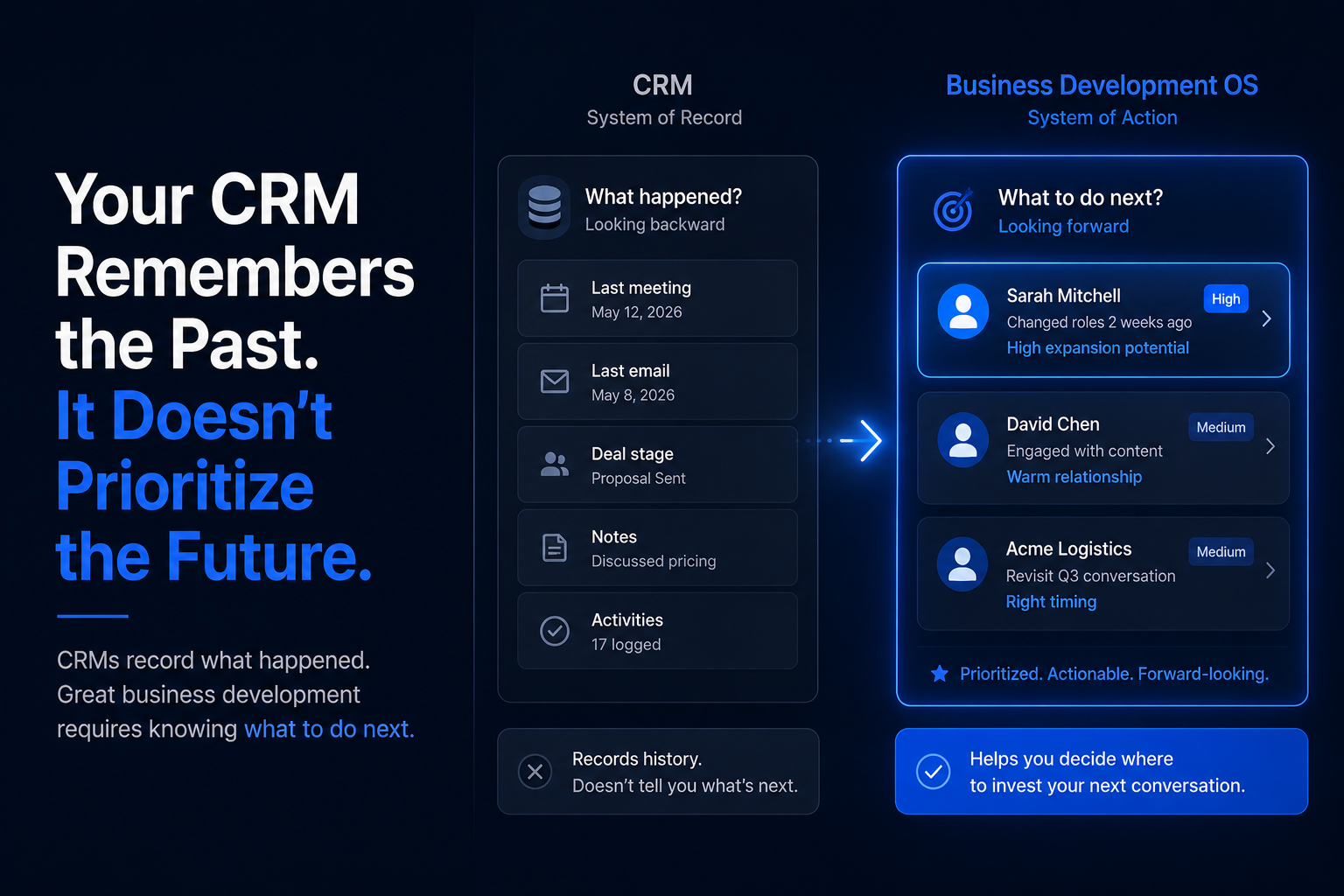
Most businesses couldn't operate without a CRM.
It tracks customers, records meetings, logs emails, and stores deal history.
It's an essential system of record.
But it's not a system of action.
That's an important distinction.
A CRM answers "What happened?"
Open almost any CRM and you'll find answers to questions like:
When was the last meeting?
What stage is the deal in?
Who owns the account?
What emails have been sent?
Those answers are valuable.
They're also backward-looking.
A CRM is designed to preserve history.
Business development asks a different question
Every morning, your team isn't asking:
"What happened six months ago?"
They're asking:
"Who should I talk to today?"
Most CRMs don't answer that.
They assume you'll already know where to focus.
The gap between data and decisions
Having information isn't the same as knowing what to do with it.
You might have thousands of contacts in your CRM.
Dozens of open opportunities.
Hundreds of completed activities.
But none of that automatically tells you which conversation deserves your attention next.
That's where prioritization becomes its own discipline.
Systems of record need systems of action
Think of it this way:
A CRM tells you what exists.
A business development workflow helps you decide what matters now.
The two solve different problems.
Both are essential.
Final thoughts
Businesses don't need less CRM data.
They need more clarity about what to do with it.
Because the hardest part of business development isn't remembering the past.
It's deciding where to invest your next conversation.
That's a problem no database can solve on its own.