
Why Business Development Starts With Prioritization, Not Prospecting
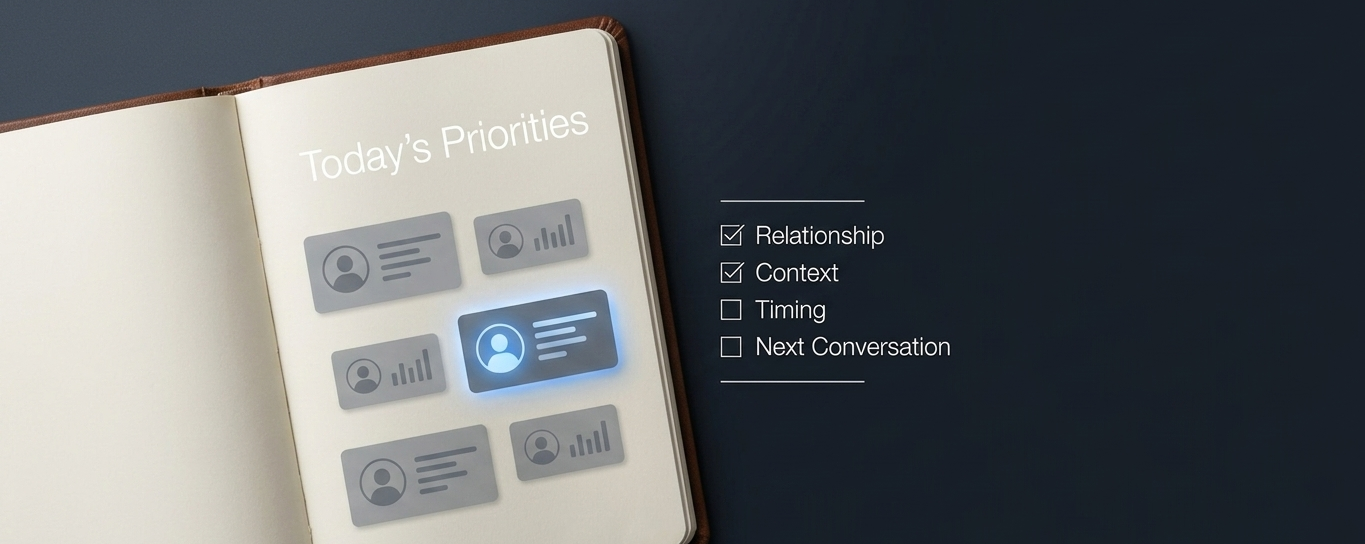
Ask most sales teams what they need, and you'll hear the same answer.
"More leads."
It sounds reasonable.
More leads should mean more conversations.
More conversations should mean more customers.
But in many cases, the real problem isn't a lack of leads.
It's a lack of prioritization.
Everyone has more people than they can talk to
Think about everyone your business already knows.
Customers.
Former customers.
Prospects.
Partners.
Investors.
Founders.
People in your LinkedIn network.
Former colleagues.
Now ask yourself a simple question.
Could your team realistically have a meaningful conversation with all of them this month?
Probably not.
The challenge isn't finding people.
The challenge is deciding who deserves your attention first.
Prospecting is easy. Choosing is hard.
Modern tools make it simple to build a list.
You can find thousands of companies in minutes.
You can export contacts with a few clicks.
You can generate outreach faster than ever.
But none of those tools answer the most important question.
Who should you talk to today?
Without that answer, every prospect looks equally important.
And when everything feels important, nothing gets prioritized well.
Good business development is a decision-making process
The strongest business development teams don't simply work harder.
They make better decisions.
Every day, they decide:
Which relationships deserve another conversation.
Which former prospects are worth revisiting.
Which customers have changed roles.
Which companies now fit their ideal customer profile.
Which conversations can wait.
That's where momentum comes from.
Not from doing more.
From choosing better.
Timing changes the value of a relationship
A conversation that went nowhere last year may be the right conversation today.
Someone may have joined a new company.
Received a promotion.
Expanded their team.
Taken ownership of a new initiative.
The relationship didn't change overnight.
The context did.
Recognizing that shift is often more valuable than finding someone new.
Build a system, not a memory
Many founders rely on memory to manage relationships.
"I should reach out to them."
"I remember they were interested."
"I think they changed companies."
That works when your network is small.
It breaks as your business grows.
Business development becomes much more consistent when you replace memory with a repeatable process.
One that helps you review relationships, identify new context, and decide where your time will have the greatest impact.
A better question
Instead of asking:
"How do we find more prospects?"
Try asking:
"Who already deserves our attention, and why?"
That question changes the way you build pipeline.
You stop measuring success by the number of names on a list.
You start measuring success by the quality of the conversations you create.
Final thoughts
Prospecting will always be part of business development.
New relationships matter.
New opportunities matter.
But prospecting shouldn't be the starting point.
Prioritization should.
The businesses that build consistent pipeline aren't always talking to the most people.
They're talking to the right people, at the right time, for the right reasons.
At Aizyn, we're building a Business Development Operating System that helps teams answer one simple question every day:
Who should I talk to next, and why?