
Stop Measuring Business Development by Activity
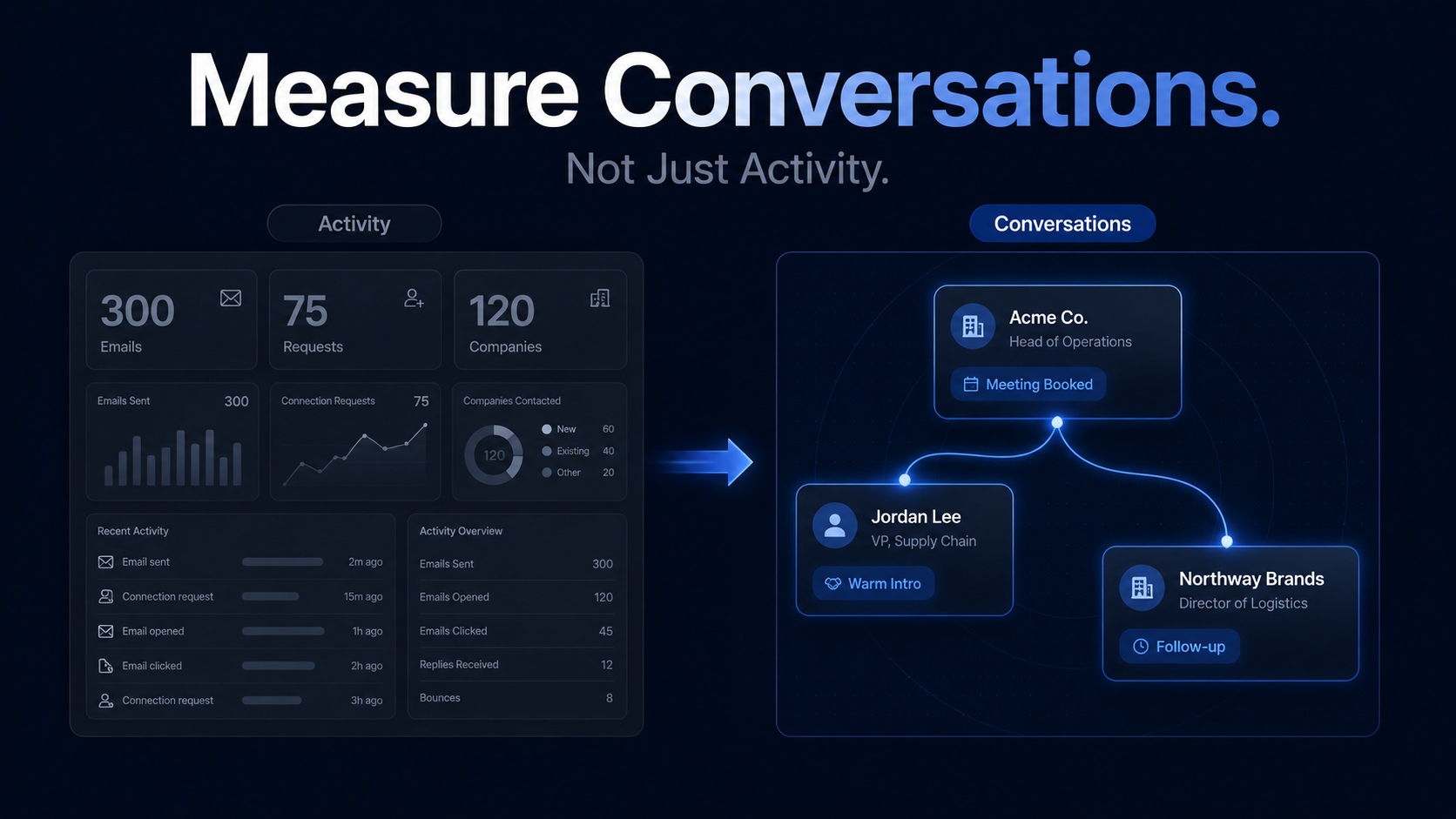
Business development has an activity problem.
Ask most teams how their week went, and you'll hear numbers like:
We sent 300 emails.
We made 75 connection requests.
We researched 120 companies.
We built three new prospect lists.
Those numbers sound impressive.
But they don't answer the only question that matters:
Did those activities create meaningful conversations?
Activity is easy to measure
Businesses naturally gravitate toward metrics they can count.
Messages sent.
Calls made.
Contacts added.
Tasks completed.
They're simple to track, easy to report, and give the impression that progress is being made.
The problem is that activity isn't the goal.
Conversations are.
Busy doesn't always mean productive
Imagine two business development managers.
The first sends 150 cold messages in a day.
The second reconnects with three former customers, schedules two meetings, and receives an introduction to a decision-maker.
Who had the better day?
If you're only measuring activity, the first person appears more productive.
If you're measuring outcomes, the answer is obvious.
Better decisions create better pipeline
Every day presents more opportunities than you have time to pursue.
New prospects.
Former customers.
Partners.
Investors.
Founders you've met.
Old conversations that deserve another look.
The real challenge isn't finding someone to contact.
It's deciding who deserves your attention today.
That's a prioritization problem, not an activity problem.
Relationships are a force multiplier
One thoughtful conversation can create opportunities that dozens of cold messages never will.
A former customer introduces you to a colleague.
A founder remembers a conversation from last year.
A connection changes companies and suddenly becomes your ideal customer.
These moments aren't accidents.
They're the result of consistently investing in relationships over time.
A better way to measure business development
Instead of asking your team:
How many messages did you send?
Try asking:
Which conversations mattered most?
Why did you choose those people?
What changed that made this the right time?
Which relationships moved forward this week?
These questions shift the focus from output to judgment.
And judgment is where great business development happens.
Build a system, not just a routine
The best teams don't rely on memory or instinct alone.
They build systems that help them:
Prioritize relationships.
Understand context.
Recognize timing.
Prepare meaningful conversations.
Follow up consistently.
Technology should support these decisions—not replace them.
Final thoughts
Business development isn't a numbers game.
It's a decision-making discipline.
Every message you send represents time you won't get back.
Every conversation you choose not to have is an opportunity that may never return.
That's why success shouldn't be measured by how much activity your team generates.
It should be measured by whether they're consistently investing their time in the right relationships.
Because better conversations don't happen by accident.
They happen when you make better decisions about where to focus.