LinkedIn Outreach: 12 Expert Tips to Get More Replies (Without the Spam)
LinkedIn outreach has a bad reputation, and it earned it. Most of what lands in people's inboxes is a stranger with a template, pitching on the first line, asking for 15 minutes before saying anything worth 15 seconds.
It doesn't have to work that way, and the people who do it well quietly out-produce the ones sending ten times the volume.
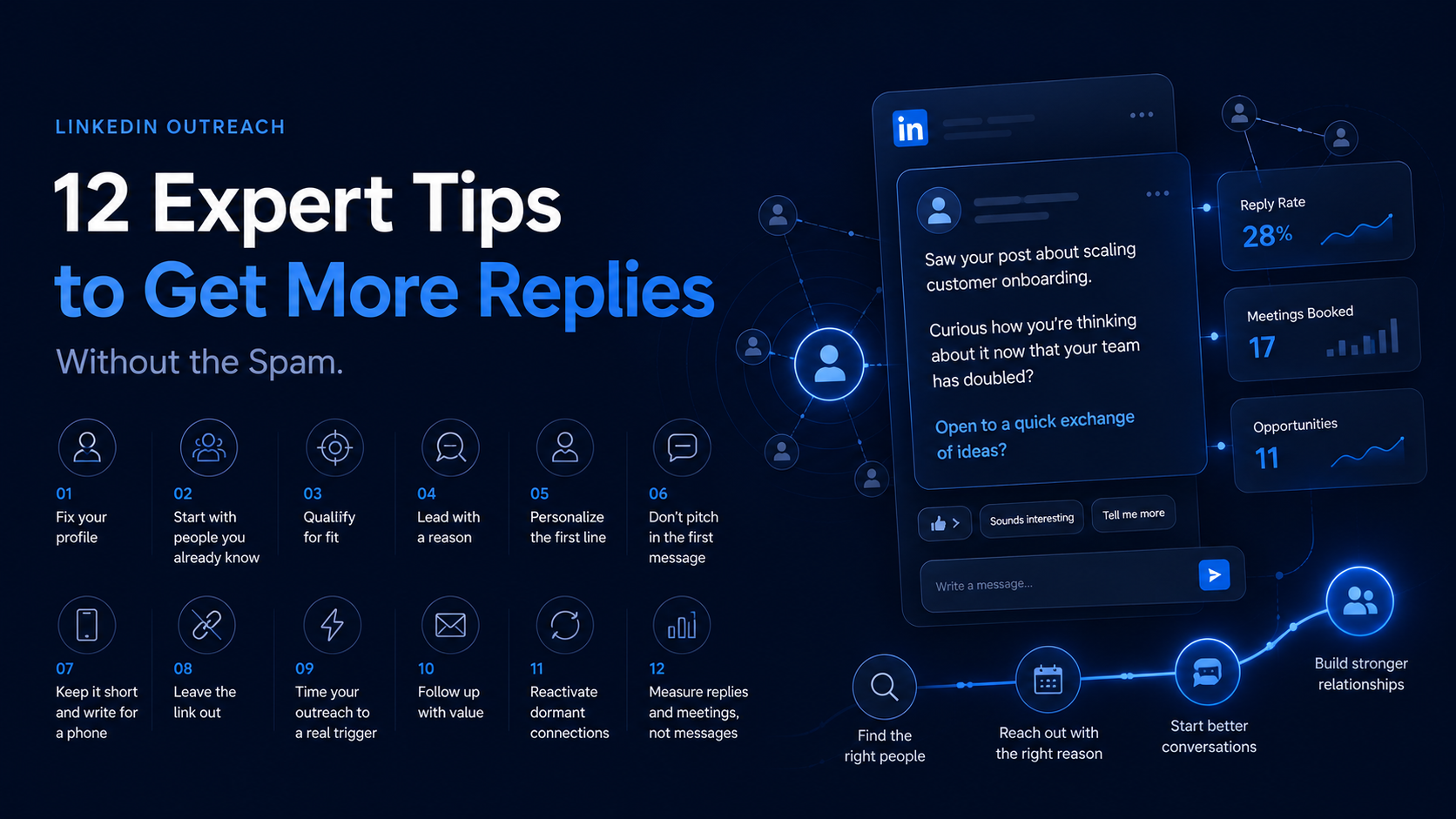
The difference is a mindset. LinkedIn is a relationship channel, not a cold-email channel. The wins come from reaching the right person at the right moment with a reason to talk, not from blasting more people faster. Here are twelve tips that reflect how the best operators actually run it.
1. Fix your profile before you send a single message
Every message you send drives traffic to one place: your profile. If it reads like a resume, you lose the reply you just earned.
Rewrite your headline to say who you help and how, not your job title. Make your banner and About section speak to the person you're reaching out to, not to a recruiter. Your profile is your landing page, and outreach is the ad that points at it. Fix the destination first.
2. Start with the people you already know
The fastest pipeline on LinkedIn is not strangers. It's the connections already in your network who you have never systematically worked.
Before you send a single cold request, go through your existing connections: past customers, old colleagues, people you met at events, warm intros that stalled. These are relationships you already earned. A message to someone who recognizes your name starts ten steps ahead of one to someone who doesn't.
3. Qualify for fit before you reach out
Volume is the enemy of quality here. A message to the wrong person costs you more than the message, because it trains you to measure effort instead of results.
Before anyone goes on your list, check that they actually fit: the right kind of company, the right role, a real reason they'd care about what you do. Ten well-qualified conversations beat a hundred sprayed ones every time. Restraint is a skill, not a limitation.
4. Lead with a reason, not a template
The single biggest predictor of a reply is whether your opener proves you had a reason to write. Templates announce themselves in the first line, and they get filed with the other forty.
A reason can be anything real: something they posted, a change at their company, a mutual connection, a shared event. If you cannot name a specific reason you're reaching out to this person today, you're not ready to send yet.
5. Personalize the first line with something only you could know
There's a difference between personalization and context. "Congrats on the new role" is personalization; anyone can do it, so it signals nothing. "You mentioned last year you'd revisit this once the team hit ten people, saw you're at fifteen now" is context, and it can only be sent to one person.
Spend your research budget on the opening line. The rest of the message matters far less than proving, in the first sentence, that you actually know who they are.
6. Don't pitch in the first message
The first message has one job: earn a reply. Not book a meeting, not explain your product, not send a deck. Just start a conversation.
Name the reason you reached out, offer one sentence of relevance, and ask a low-friction question. Save the pitch for after they've shown interest. Asking for a meeting before you've earned attention is the fastest way to get ignored.
7. Keep it short and write for a phone
Most people read LinkedIn on their phone, between other things. A long message reads as work, and work gets postponed and forgotten.
Two or three short sentences. One idea. One clear, easy thing to respond to. If your message needs a scroll, it needs a cut. Brevity is not lazy here, it's respectful, and it gets answered.
8. Leave the link out of the first touch
A link in a first message does two bad things: it tanks your deliverability signals, and it tells the reader you care more about the click than the conversation.
Lead with the message. If they're interested, they'll ask, or you'll share the link in the second reply where it actually belongs. Earn the click before you send it.
9. Time your outreach to a real trigger
This is the tip that separates good operators from great ones. The same message that feels random in March feels natural the week something changes.
Reach out when there's a trigger: a funding round, a new senior hire, a role change, an expansion, a returning burst of activity after a long silence. The event gives you a reason and the timing gives you permission. A relationship becomes an opportunity at a moment, so aim for the moment.
10. Follow up with value, not "just checking in"
Most replies come on the follow-up, but only if the follow-up adds something. "Just checking in" and "bumping this up" tell the reader you have nothing new to say, and they train them to ignore you.
Instead, give something on the second touch: a relevant example, a specific thought, a reason this is still worth their time. Space your touches three to five days apart, cap it at two or three, then stop. Persistence works; pestering doesn't.
11. Reactivate dormant connections and former customers
The warmest opportunities you have are people who already know you. A former customer who churned on timing, a prospect who said "not now," a connection you made years ago and never followed up with.
These aren't dead. They're waiting for a reason. When the reason arrives, and it will, they aren't a cold account. They're someone who already knows your value and just needs the right moment to reconnect. Watch for that moment.
12. Measure replies and meetings, not messages sent
The vanity metric on LinkedIn is volume: connections made, messages sent, tasks closed. None of it is pipeline.
Track the numbers that actually matter: reply rate, meetings booked, opportunities created. If you're measuring effort, you'll optimize for effort, and you'll end up sending more mediocre messages faster. Measure outcomes, and you'll naturally do fewer, better conversations, which is the whole point.
The thread running through all twelve
Notice what these tips have in common. Not one of them is about doing more. They're about doing it warmer, more relevant, and better timed.
That's the real shift in LinkedIn outreach. The channel rewards people who treat it as a way to activate relationships they already have, at the moment those relationships become relevant, and punishes people who treat it as a bigger megaphone.
The hard part isn't sending the message. It's knowing which of the hundreds of people you already know is worth a message this week, and why. Get that right, and every one of these tips gets easier. That is exactly the problem Aizyn was built to solve: it watches your network for the moments that make a connection worth reaching out to, and hands you the short list each morning with the reason attached. You still write the message. You just stop guessing who deserves one.